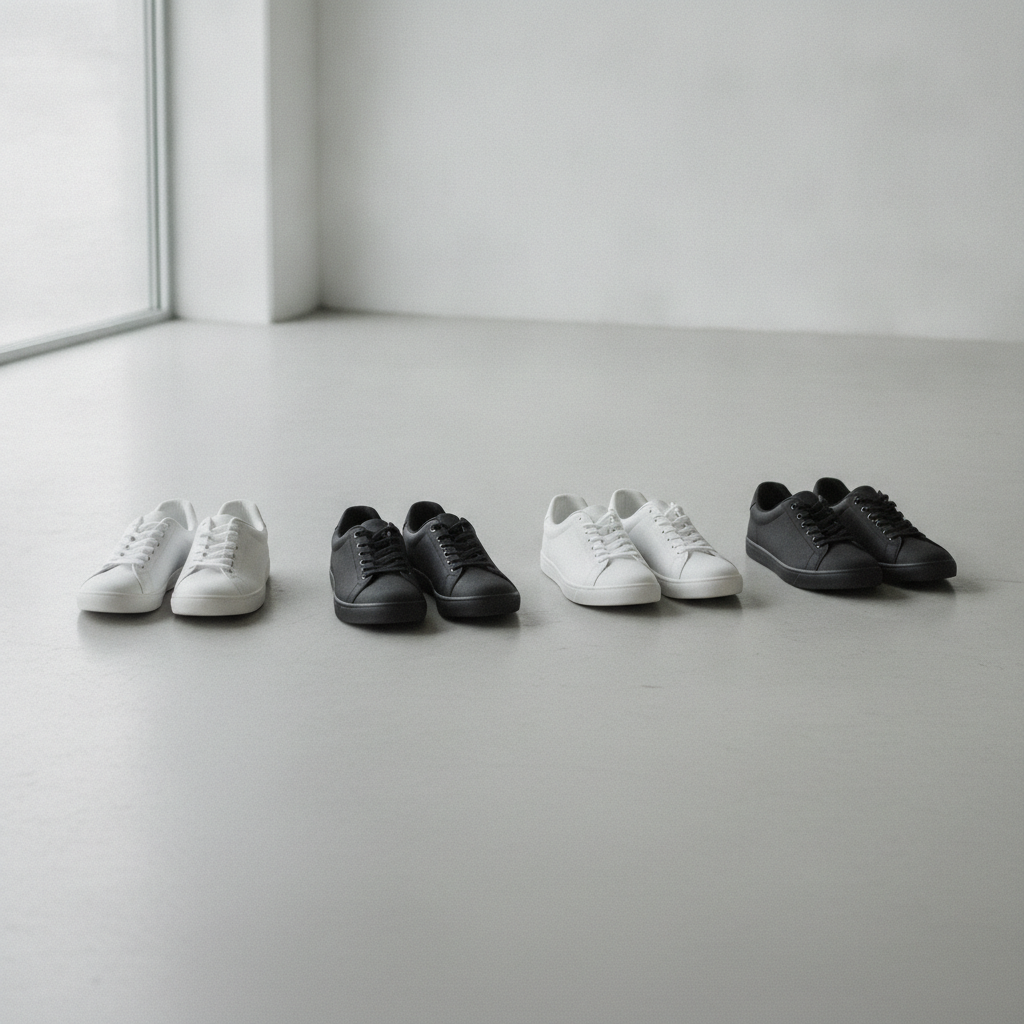
Trainers have quietly become the default footwear for most people most of the time. They are worn to work, to school, on holiday and at the weekend, and the boundary between sportswear and everyday clothing has largely dissolved. For an independent shop that means a single category that sells to nearly every customer who walks in, which is rare.
The demand is genuinely year-round
Unlike sandals or boots, trainers do not have a season. Demand shifts between styles across the year, with lighter styles in summer and more substantial ones in winter, but the underlying volume does not collapse. That makes the category easier to plan and reduces the amount of stock that has to be cleared at the end of a season.
They also replace on a predictable cycle, because they wear out through use rather than going out of fashion. A customer who buys a pair for daily wear is back within the year.
Buy the core, test the fashion
The reliable money is in plain, versatile styles. White, black and neutral trainers in a simple silhouette sell continuously to a broad range of customers. Fashion-led styles sell faster when they land correctly and become markdown stock when they do not.
A sensible split is a large majority of the budget in core styles carried across a full size range, with a small slice reserved for testing trend pieces shallow. If a trend style sells through, repeat it. If it does not, clear it before the next wave arrives.
What to inspect on a sample
- Sole bonding, since a glued sole separating is the most common trainer failure and generates immediate complaints
- Midsole cushioning, which is what makes a shoe wearable all day and is easy to skimp on
- Upper materials and how they behave when creased, particularly on synthetic leather
- Stitching around stress points, especially where the upper meets the sole
- Sizing consistency across the run, which varies widely between suppliers
Flex the sample hard several times. Poor bonding shows up quickly under that test and not at all in a photograph.
Size and width
Trainers sell across a wider size range than most footwear because they are bought by every age group. Buy the middle deep, but do not neglect the ends, particularly if you serve families. Width is the other consideration: customers with wider feet struggle to find trainers and become extremely loyal to a shop that stocks something they can wear.
Merchandising and add-ons
Display trainers where they can be picked up and handled, with a size guide visible, and keep the display in reach rather than behind the counter. They attach naturally to socks, insoles, cleaning products and laces, all of which carry good margins on small unit prices and take almost no space.
The stockroom discipline matters more than in any other footwear category, because the volume is higher. Keep an accurate record of what remains in each size, and clear broken runs promptly rather than letting the odd sizes accumulate into a problem that takes a full sale to solve.