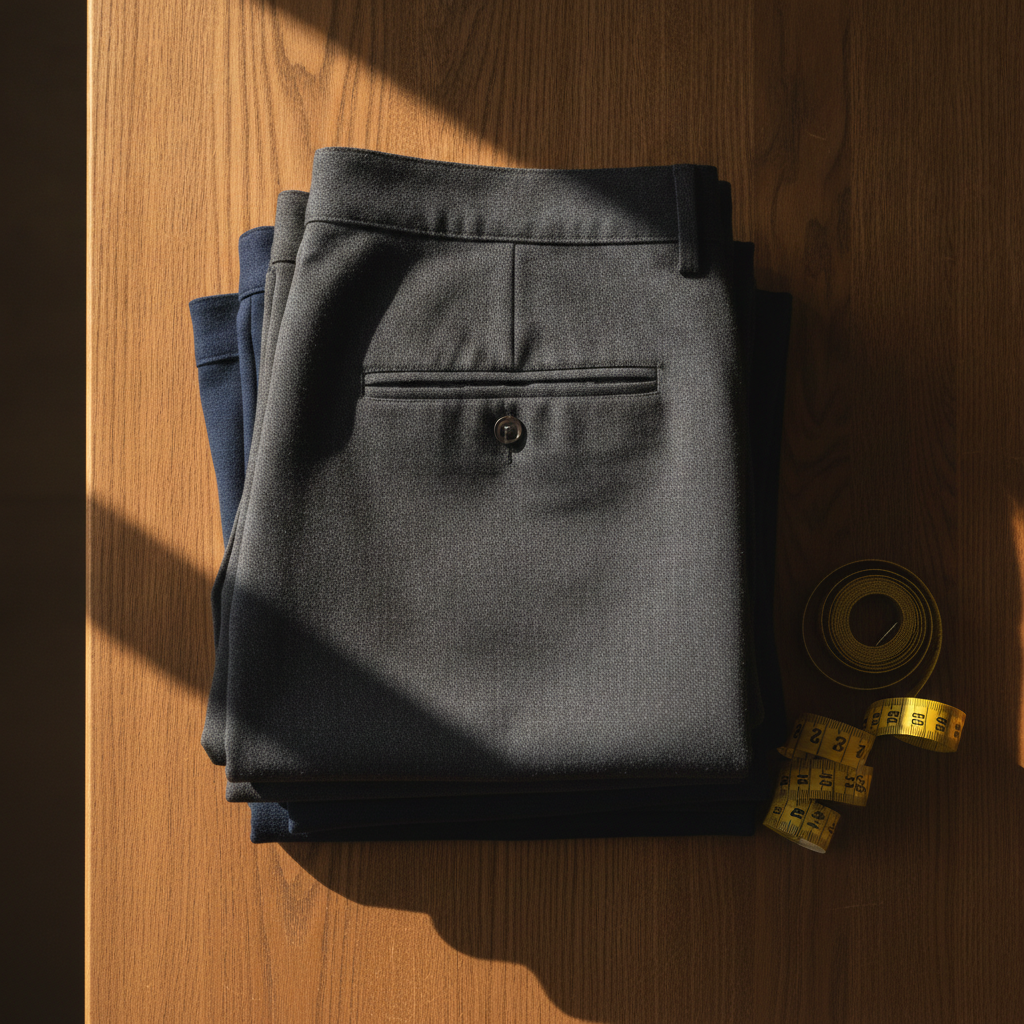
Trousers are the garment customers most want to buy and most often leave without. The reason is always fit, and fit in trousers has more variables than in anything else you stock: waist, hip, rise, thigh and leg length all have to work at once. A shop that gets trousers right builds enormous loyalty, because the customer who finally finds a pair that fits comes back for them in every colour.
Leg length is the decision most retailers get wrong
Offering a single leg length across the range is the standard shortcut and it costs sales every week. Customers at either end of the height range simply cannot wear the stock, and the alteration cost puts them off.
If a supplier offers multiple leg lengths, take them on your core lines even if it means fewer styles. If they do not, favour styles where the length is forgiving: cropped cuts, wide legs that are meant to sit shorter, and elasticated or drawstring styles. Building a relationship with a local alterations service and mentioning it at the fitting room recovers a surprising number of sales.
Buy for consistency, not novelty
The most valuable trouser line in a shop is the one that never changes. A customer who knows you always stock the same black trouser in her size will come back for it. Novelty styles are worth carrying, but they should sit around a stable core rather than replace it.
That means choosing suppliers who keep lines in production rather than changing the range every season. Ask directly how long a style has been running and whether it is likely to continue.
What to check on the sample
- Fabric recovery. Stretch fabrics that do not spring back bag at the knee within a day and generate complaints.
- Waistband construction. A rolled or twisted waistband is the fastest route to a return.
- Pocket bags. Cheap pocket linings tear and show through pale fabrics.
- Consistency between sizes, which is a recurring problem on imported stock. Measure two sizes of the same style and check the grading is even.
Size range beats style count
Given a fixed budget, a smaller number of styles carried across a full size range will outsell a wider selection with gaps. Every gap is a customer turned away, and turned-away customers do not usually come back to check whether you have restocked.
This is particularly true at the larger end of the range, which independents routinely under-buy. Demand there is strong and competition is weaker.
Fitting room practice
Trousers sell in the fitting room, not on the rail. Make sure the room is well lit with a proper mirror, that staff offer the size above and below without being asked, and that anything brought back is re-hung immediately rather than left in a pile.
Keep a note of what customers ask for and cannot find. Over a season that note is better buying information than any trend report, because it is your own customers telling you exactly where the gaps are.