
Author: Nisha Rawat

  • The Best USB Type-C Cables, and How to Tell Them Apart

    The Best USB Type-C Cables, and How to Tell Them Apart

    The USB Type-C connector was supposed to end cable confusion. Instead it created a new kind, because the connector is now universal while what runs through it is not. Two cables that look identical can differ by a factor of forty in data speed and by a large margin in charging power. Nothing on the outside tells you which is which.

    The three things a Type-C cable does

    Every Type-C cable handles up to three jobs, and a given cable may be good at one and useless at another.

    • Power delivery, measured in watts. Cheap cables often cap out well below what a laptop needs.
    • Data transfer, measured in gigabits per second. Many charging cables carry data at the slowest possible speed, which is fine for a phone backup and painful for a drive.
    • Video output. Only cables supporting the right alternate modes will drive a monitor at all.

    A cable sold as a charging cable frequently has no high-speed data wires inside it. It will still connect your drive; it will just move files at a fraction of the speed you expected.

    What to look for when buying

    The specification matters more than the brand. Look for the cable’s stated wattage and its data standard printed on the packaging or the listing. If neither is stated, assume the lowest of both. A reputable seller states them because they are a selling point.

    Certification is the other useful signal. Certified cables have been tested against the specification, which mainly protects you from the genuinely dangerous end of the market: badly made cables that misreport their capability and can damage what they are plugged into.

    Build quality is where cables actually fail

    Almost no cable fails electrically. They fail mechanically, at the point where the cable meets the connector, because that is where the bending happens. The features that extend life are simple:

    • A proper strain relief collar rather than a hard moulded joint
    • Braided sleeving, which resists kinking better than smooth PVC
    • Some weight to the connector housing, which usually indicates a metal shell rather than a hollow plastic one

    Length matters too, and not only for convenience. Longer cables lose more over the run, so very long cheap cables often charge noticeably slower than short ones.

    Practical buying advice

    For most people, two cables cover everything. A short high-specification cable for fast charging and data, kept at the desk, and a longer basic charging cable for the sofa or the bedside where speed is irrelevant. Buying one expensive cable and using it for everything means dragging it around and wearing it out.

    Buy from sellers who publish specifications, avoid unbranded multipacks where no specification is given at all, and keep the packaging long enough to know which cable is which. Marking the connector with a small piece of tape sounds crude and saves a lot of frustration later.

  • Wholesale Pyjamas: The Collection to Go For This Season

    Nightwear rarely gets the attention it deserves in a buying plan. It is not exciting, it does not photograph like occasion wear, and it does not carry the markup of tailoring. What it does do is sell steadily all year, spike hard at gift-giving periods, and forgive the sizing mistakes that make other categories risky.

    Why the category is unusually safe

    Pyjamas are bought loose. That single fact removes most of the fit risk that makes trousers and tailoring difficult. A customer between sizes will take either, returns are low, and a broken size run does less damage because the remaining sizes are still wearable by more people.

    Demand is also less trend-driven than daywear. Classic checks, plain jersey sets and simple prints sell year after year, so unsold stock carries over without looking dated.

    Buy for the gift peak, stock for the year

    The commercial pattern is consistent: steady baseline demand with a large peak in the gifting season and a smaller one around holidays. Plan the buy in two parts. A core range that stays on the shelf all year in neutral colours and classic patterns, and a seasonal layer bought deep for the peak with more decorative styling and gift-ready packaging.

    Commit to the peak stock early. Nightwear suppliers sell out of the popular gift styles well before the season, and late orders end up taking whatever is left.

    Fabric decides repeat purchase

    • Brushed cotton and flannel for winter, where warmth is the whole proposition
    • Lightweight cotton and viscose blends for summer and for warm sleepers
    • Jersey for the everyday middle of the range
    • Satin styles for the gift and occasion end, which look far more expensive than they cost

    Check how the fabric behaves after washing. Nightwear gets washed more often than almost anything else, and a set that pills or shrinks after three washes will not be repurchased. Ask for wash test information and, where you can, wash a sample yourself.

    Presentation for gifting

    During the gift peak, packaging does a disproportionate amount of the selling. Sets presented folded in a box or a ribboned bag move faster than the same product on a hanger, because the customer is buying a present rather than a garment. Some suppliers offer gift packaging as an option; where they do not, simple boxes and tissue cost little and lift the perceived value.

    Display them where gift shoppers are looking, which is near the till and the front of the shop rather than tucked in with underwear.

    Sizing and range

    Carry the full range and be generous at the larger end. Nightwear is one of the categories where customers most often buy up a size for comfort, so demand skews larger than your daywear pattern would suggest. Matching styles for different family members are worth carrying at the peak, since they are bought together and lift the transaction value considerably.

  • Points to Note Before Investing in a Wholesale Sliders Collection

    Sliders sit in an odd commercial position. They cost very little at wholesale, they sell in volume during a short window, and the quality difference between a good pair and a poor pair is invisible in a photograph and obvious after a week of wear. That combination catches out retailers who buy on price alone.

    The season is short and the timing is unforgiving

    Slider demand is concentrated into warm weather and holiday shopping. Miss the front of that window and the whole buy carries over to the following year, tying up money and stockroom space for eleven months. Order early enough that stock lands before the first warm spell rather than after it, and accept that the last few weeks of the season will be discounted.

    Sole quality is where the complaints come from

    The footbed is what customers actually notice. A slider with a hard, thin sole is uncomfortable within an hour and generates returns. One with a moulded, slightly cushioned footbed feels like a more expensive product and gets worn all summer.

    On a sample, check these:

    • Whether the footbed has any give when pressed with a thumb
    • How the upper strap is attached, since a strap pulled through the sole is the most common failure
    • Grip on the outsole, because a smooth sole on a wet poolside is a genuine safety issue
    • Whether the sole yellows or hardens after exposure to sun and chlorine

    Ask the supplier about the last point specifically. It is the difference between a customer who comes back and one who does not.

    Size runs and shrinkage of the range

    Sliders sell across a wide size range and the middle sizes go first, as with all footwear. Buy the middle deep. Where a style is unisex, be clear about which size scale is printed on the shoe, because mismatched sizing across men’s and women’s scales creates confusion at the till and returns afterwards.

    Buy fewer colours than you think

    Black and one or two neutrals will outsell the entire colour range combined in most shops. Bright colours look good in the display and sit in the stockroom. Two strong colours alongside the neutrals is usually the right balance for an independent.

    Pricing and presentation

    Sliders are a low-ticket item, so the volume has to do the work. Presenting them properly still matters: a stacked, tidy display with clear sizes visible sells more than a bin of mixed pairs, and it reduces the labour of matching pairs at the end of each day.

    They also work well as an add-on. Positioned near swimwear, holiday clothing or the till they attach to other purchases, which is where the category earns more than its shelf space suggests. Treat them as a companion line rather than a destination purchase and the numbers work.

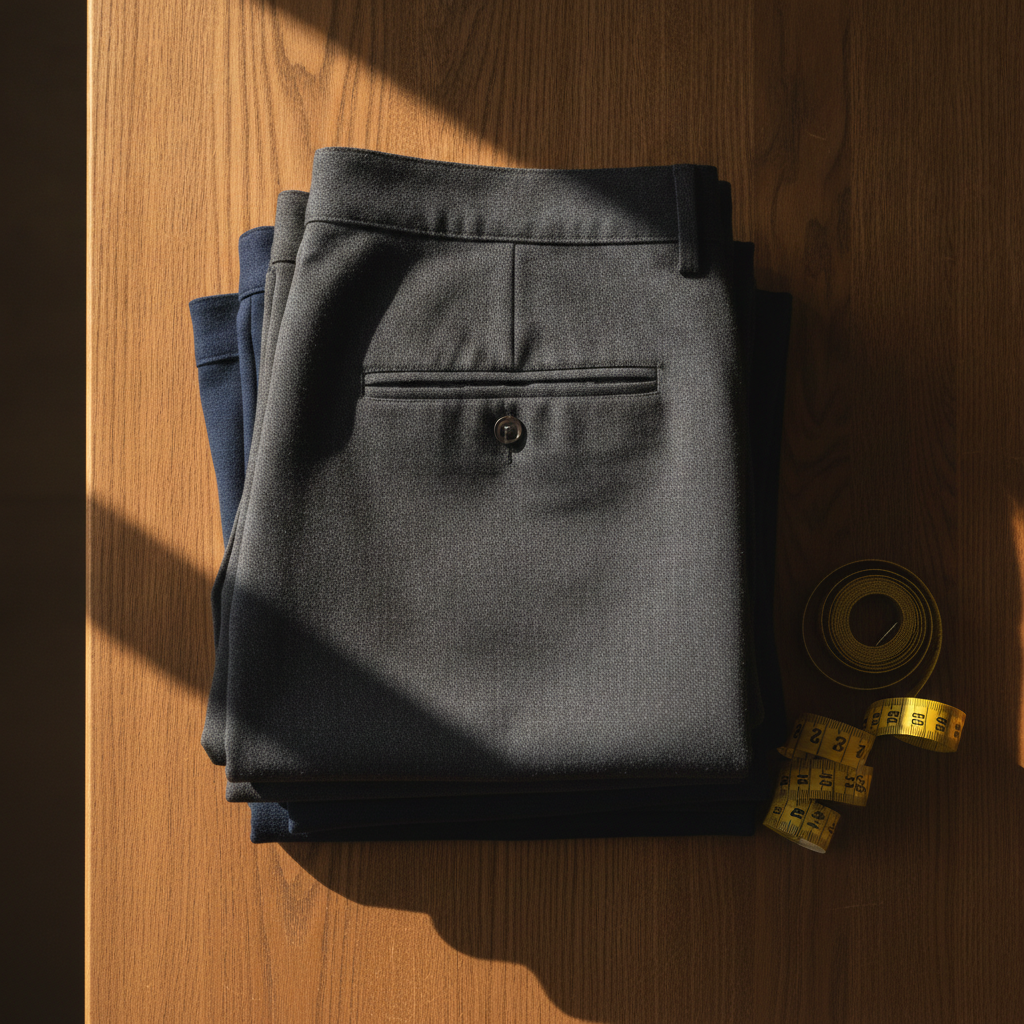
  • Tips for Stocking Wholesale Ladies Trousers in Your Retail Store

    Tips for Stocking Wholesale Ladies Trousers in Your Retail Store

    Trousers are the garment customers most want to buy and most often leave without. The reason is always fit, and fit in trousers has more variables than in anything else you stock: waist, hip, rise, thigh and leg length all have to work at once. A shop that gets trousers right builds enormous loyalty, because the customer who finally finds a pair that fits comes back for them in every colour.

    Leg length is the decision most retailers get wrong

    Offering a single leg length across the range is the standard shortcut and it costs sales every week. Customers at either end of the height range simply cannot wear the stock, and the alteration cost puts them off.

    If a supplier offers multiple leg lengths, take them on your core lines even if it means fewer styles. If they do not, favour styles where the length is forgiving: cropped cuts, wide legs that are meant to sit shorter, and elasticated or drawstring styles. Building a relationship with a local alterations service and mentioning it at the fitting room recovers a surprising number of sales.

    Buy for consistency, not novelty

    The most valuable trouser line in a shop is the one that never changes. A customer who knows you always stock the same black trouser in her size will come back for it. Novelty styles are worth carrying, but they should sit around a stable core rather than replace it.

    That means choosing suppliers who keep lines in production rather than changing the range every season. Ask directly how long a style has been running and whether it is likely to continue.

    What to check on the sample

    • Fabric recovery. Stretch fabrics that do not spring back bag at the knee within a day and generate complaints.
    • Waistband construction. A rolled or twisted waistband is the fastest route to a return.
    • Pocket bags. Cheap pocket linings tear and show through pale fabrics.
    • Consistency between sizes, which is a recurring problem on imported stock. Measure two sizes of the same style and check the grading is even.

    Size range beats style count

    Given a fixed budget, a smaller number of styles carried across a full size range will outsell a wider selection with gaps. Every gap is a customer turned away, and turned-away customers do not usually come back to check whether you have restocked.

    This is particularly true at the larger end of the range, which independents routinely under-buy. Demand there is strong and competition is weaker.

    Fitting room practice

    Trousers sell in the fitting room, not on the rail. Make sure the room is well lit with a proper mirror, that staff offer the size above and below without being asked, and that anything brought back is re-hung immediately rather than left in a pile.

    Keep a note of what customers ask for and cannot find. Over a season that note is better buying information than any trend report, because it is your own customers telling you exactly where the gaps are.

  • Points to Stock Wholesale Jewellery UK With the Least Investment

    Jewellery is where a lot of small retailers start, because the entry cost is low and a single box of stock fills a counter. It is also where a lot of capital quietly disappears, because the low unit price makes over-buying feel harmless. Two hundred pieces at a few pounds each does not feel like a large commitment until none of it moves.

    Start with a deliberately small range

    The temptation is to offer choice. Resist it at the start. A tight range of complementary pieces sells better than a sprawling one, because customers buying accessories are making a quick decision and too many options stall it.

    A workable opening range is a handful of everyday pieces in a single finish, a small number of occasion pieces, and one or two statement items that draw people to the counter. Build from what sells rather than guessing across the whole category.

    Stick to one metal finish first

    Mixing gold-tone and silver-tone from day one doubles the stock needed to look complete and halves the depth in each. Pick whichever suits your customer base, build depth in it, then add the second finish once the first is turning over reliably.

    The same applies to styles. A coherent counter looks intentional. A counter with everything on it looks like a market stall regardless of the quality of what is on it.

    Check the things that generate complaints

    Costing little does not excuse quality problems, and jewellery complaints are disproportionately about the same handful of faults.

    • Plating that wears through quickly, particularly on rings and bracelet clasps
    • Clasps that fail, which is the single most common return reason
    • Nickel content, which matters legally as well as commercially for anything worn against skin
    • Tarnishing in the display case before it is even sold

    Ask suppliers directly about plating thickness and nickel compliance. A supplier who cannot answer is not one to buy skin-contact products from.

    Keep the investment low by buying shallow and repeating

    Jewellery suppliers usually have low minimums and quick reorders, which is a real advantage. Use it. Buy a small quantity of each line, see what moves within a few weeks, and reorder the winners rather than committing deeply upfront. The category rewards frequent small orders far more than most.

    Mixed packs are worth treating carefully. They look like good value per piece and often contain a proportion of designs you would never have chosen, which then sit in the case indefinitely.

    Presentation is most of the value

    The same necklace looks like a few pounds on a plastic hook and considerably more on a decent bust or a lined tray. Display materials are cheap relative to the effect they have on perceived value and on what you can charge. Keep the case clean, keep the lighting on it, and rotate the front pieces regularly so regular customers see something new.

    Packaging matters for the same reason. A small box or pouch costs very little, makes the purchase feel like a gift, and increases the chance the buyer comes back for the next one.

  • Why the Wholesale Chiffon Dress Market Keeps Growing

    Why the Wholesale Chiffon Dress Market Keeps Growing

    Ask a group of independent retailers which categories carried them through the last few difficult years and occasion wear comes up repeatedly. Chiffon in particular, because it sits at the intersection of two things customers still spend on: events they cannot postpone, and clothes that photograph well.

    The demand is event-driven, not trend-driven

    This is the important distinction. A trend-driven category rises and falls with fashion cycles and leaves the retailer holding stock when the cycle turns. An event-driven category is tied to weddings, parties, religious occasions and holidays, all of which recur regardless of what is fashionable. The styles change; the underlying demand does not.

    That makes forecasting easier. You are not guessing whether a silhouette will still be wanted in eight weeks, you are looking at a calendar. The backlog of postponed weddings after the disruption of recent years produced a visible surge, and the pattern has stayed strong since.

    Margin behaviour

    Occasion pieces support a higher markup than everyday clothing, and customers compare prices less carefully because the purchase is emotional and time-bound. That is not a licence to overprice, but it does mean the category can absorb a normal markup without stalling.

    The other margin advantage is add-on sales. Nobody buys an occasion dress in isolation. Shoes, a bag, a wrap and jewellery all attach to the same transaction if they are within sight of the fitting room.

    Where the risk sits

    The category is not free money. Three risks matter.

    • Sizing. Occasion wear is bought for a specific date, so a poor fit becomes a return rather than a shrug.
    • Quality perception. A customer buying for a wedding inspects the garment far more closely than one buying a t-shirt.
    • Timing. Miss the peak and the stock sits for a full year, because the event has passed.

    All three point the same way: buy fewer styles, buy them earlier, and inspect them harder.

    What is changing on the supply side

    Wholesale suppliers have got better at short runs and faster reorders, which suits independents. Where a buy once meant committing to a full container, several suppliers now offer smaller repeat quantities on core lines. That reduces the penalty for guessing wrong and makes it viable to test a style before backing it.

    Material quality has also become a competitive point rather than an afterthought. Buyers ask about fabric weight and lining as a matter of course now, and suppliers who cannot answer lose orders. That is a healthy development for anyone stocking the category.

    Practical conclusion

    Treat chiffon and occasion wear as a planned, calendar-driven part of the buy rather than an opportunistic one. Identify the peaks in your own trading data, commit early enough to get the stock in before them, buy the core sizes deep, and hold the range back from discount until the event window has genuinely closed. Done that way it is one of the more predictable categories an independent can stock, which is not something you can say about much of clothing retail.

  • How Stocking Wholesale Chiffon Dresses Can Increase Your Sales

    Chiffon has a peculiar place in an independent shop’s buying plan. It photographs beautifully, it carries an occasion price, and it moves quickly in the right months. It is also thin, easily marked, and unforgiving of poor construction, so a cheap chiffon buy can generate more complaints than any other fabric in the shop.

    Why it earns its rail space

    The commercial case is straightforward. Chiffon dresses sit in occasion wear, where customers are less price-sensitive than they are on everyday clothing. Someone buying for a wedding, a party or a holiday is buying to a deadline, and deadline shopping converts. The same customer will often add shoes or a bag in the same visit, which is why occasion lines pull average transaction values up.

    The fabric also drapes in a way that suits a wide range of body shapes, so a single style will fit more customers than a structured garment in the same size range. That improves sell-through across the size run, which is where footwear and tailoring both struggle.

    What to check on the sample

    Chiffon quality varies enormously at similar wholesale prices.

    • Lining. An unlined chiffon dress is close to unsellable in most of the country. Check the lining is properly cut, not a token panel.
    • Seam finish. Chiffon frays badly, so look for French seams or a proper overlock rather than a raw edge.
    • Weight and hand. Very light chiffon creases in transit and hangs badly on a rail.
    • Colour fastness. Ask about wash testing, particularly on deep colours.

    Hold the sample up to light. If the weave is uneven or the print does not sit square to the grain, the whole batch will be the same and customers will notice on the hanger.

    Buying to season

    Occasion wear is more seasonal than most categories, and the seasons are not the obvious ones. Wedding season and party season drive the two clear peaks, with a holiday-shopping run before the main summer break. Buying into those peaks means committing weeks earlier than feels comfortable, because lead times on imported stock are long.

    Buy the peak deep and the shoulder shallow. Left-over occasion stock is difficult to clear because the customer has already bought for the event.

    Merchandising matters more than usual

    Chiffon looks poor crushed on a full rail and excellent with space around it. Give the range room, hang it where the light is decent, and steam it before it goes out. That last step sounds trivial and is not: a creased chiffon dress reads as cheap regardless of what it cost you.

    Styling helps too. Showing a dress with a jacket or a wrap answers the objection that occasion pieces are only wearable once, and it moves a second item at the same time.

    Handling and aftercare

    Tell customers how to care for it, on a swing tag or at the till. Most chiffon complaints are the result of a hot wash rather than a fault, and a clear care instruction reduces both returns and the argument that follows one. Keep a steamer behind the counter for anything that comes back looking tired and can go straight back out.

  • Points to Stock Wholesale Shoes UK in 2022

    Points to Stock Wholesale Shoes UK in 2022

    Footwear is the category that punishes casual buying hardest. A rail of dresses that does not sell can be discounted and cleared. A shoe range that does not sell leaves you with a stockroom of odd sizes, because the sizes that move go first and what remains is the tail nobody wants.

    The size curve is the whole game

    Every shoe supplier will offer a size run, and the default run they offer is usually not the one your customers need. UK women’s footwear concentrates heavily around the middle of the range, and the extremes at either end sell slowly everywhere. If you accept a flat run with equal quantities across all sizes, you are buying dead stock on purpose.

    Ask whether the supplier will split a run or weight it. Many will, particularly on repeat orders. If they will not, buy fewer styles in the correct depth rather than more styles in the wrong shape.

    Comfort sells more reliably than fashion

    Seasonal trends move quickly in footwear and the risk is real. What does not move is the demand for shoes people can stand up in all day. Everyday styles with a sensible sole, a wide enough fit and a neutral colour outsell statement pieces across a full year in almost every independent shop.

    That does not mean avoiding fashion entirely. It means treating fashion as the small, high-risk slice of the buy and comfortable core lines as the volume that pays the rent.

    Check the construction before the price

    The things worth inspecting on a sample:

    • Whether the sole is stitched or purely glued, and how the glue line looks under flexing
    • The lining, which is where cheap shoes fail first and generate returns
    • Insole quality, because it determines whether the shoe is wearable for a full day
    • Consistency of sizing across the run, which is a common problem with imported stock

    Sizing consistency deserves particular attention. If a supplier’s size five runs small in one style and large in another, your return rate climbs and customers stop trusting the shop.

    Plan for returns properly

    Footwear has a higher return rate than almost anything else you will stock, and it climbs further if you sell online. Fit is the reason in most cases. You can reduce it by publishing accurate measurements rather than relying on the nominal size, by noting where a style runs narrow, and by training staff to measure feet rather than asking what size someone usually takes.

    Build the expected return rate into your margin planning. A category that looks profitable at a headline markup can be marginal once returns are counted honestly.

    Storage and stock control

    Shoes take up more room than their value suggests, and boxes degrade in damp storerooms. Keep them off the floor, keep the stockroom dry, and keep a simple record of what is left in each size so you know when a line is broken rather than discovering it when a customer asks. A broken size run should be cleared, not held, because the odds of selling the remainder at full price fall away sharply once the middle sizes are gone.

  • Open the Gates for Wholesale Fashion by Using These Simple Tips

    Every new retailer thinks the hard part of wholesale fashion is finding the stock. It is not. Stock is abundant and suppliers are easy to reach. The hard part is buying the right quantity of the right thing at a price that still leaves you a margin after markdowns, and that is a discipline rather than an eye for style.

    Buy narrow before you buy wide

    The most common opening mistake is buying one of everything. It feels safe because you are covered for every customer, but it leaves you with no depth in the lines that actually sell and a shop full of single sizes that nobody wants. Pick a narrow range and buy it properly. Six styles bought in a full size run will teach you more in a month than sixty styles bought in ones and twos.

    When a style sells through, repeat it. When it does not, mark it down early. Retailers lose more money holding out for full price on a dead line than they ever lose by discounting quickly.

    Understand the terms before you order

    Wholesale has its own vocabulary and misunderstanding it is expensive.

    • Minimum order value is the floor for the whole order, not per style
    • Pack sizes mean you may be forced to take a fixed size ratio
    • Lead time on imported stock can run to weeks, which matters for seasonal lines
    • Return policies on wholesale are usually far tighter than retail, and faulty-only is common

    Ask about all four before you place a first order, in writing. A supplier who will not answer plainly is telling you something useful.

    Sample before you commit

    Photographs flatter everything. Order a sample of anything you plan to buy in depth, and handle it. Check the seam finish, the weight of the fabric, whether the print sits straight, and how it looks after a wash. A garment that loses shape after one wash generates returns and complaints that cost more than the margin on the whole order.

    If a supplier refuses to sell samples, buy one unit at retail price from them if you can. It is cheap insurance.

    Work out your real margin

    The cost of a garment is not the wholesale price. It is the wholesale price plus delivery, plus duty if you are importing, plus the cost of returns and the cost of markdowns on the units that never sell at full price. A line bought at a third of retail sounds comfortable until a fifth of it goes out at half price.

    A simple rule that works for most independents: assume a proportion of every order will sell at a discount, build that into the margin you plan for, and treat anything better than that as a good season rather than the baseline.

    Build a relationship with two or three suppliers

    Spreading orders across a dozen suppliers gets you nothing. Concentrating them with a few gets you better terms, earlier sight of new ranges, and someone who will actually take your call when a delivery is wrong. Reliability matters more than the last few percent on price, because a late delivery in a seasonal business is not a discount problem, it is a lost season.

  • Eco Design in Packaging: Methodologies and Tools

    Eco Design in Packaging: Methodologies and Tools

    Packaging is usually the last thing a small manufacturer thinks about and the first thing a customer notices. It arrives at the end of the process, after the product is finished and the launch date is fixed, which is exactly why so much of it is wasteful. Eco design tries to move that decision forward, to the point where changing it is still cheap.

    The principle is simple enough. You look at the whole life of the pack, from the raw material through to what happens when someone throws it away, and you try to reduce the damage at every stage rather than optimising one part and making another worse. The classic failure is switching to a material that is easier to recycle but so much heavier that the extra transport emissions wipe out the gain.

    Start by measuring what you already use

    Before any redesign, weigh things. Take a representative order, weigh every component of the packaging separately, and record it. Board, tape, void fill, labels, inner bags, pallet wrap. Most people are surprised by two numbers: how much the void fill weighs in aggregate, and how much board is being used to ship air.

    That single audit usually finds savings that need no new supplier at all. Cutting box sizes so products do not rattle removes both board and fill. Ordering two extra box sizes often reduces total material more than any material substitution.

    The methodologies worth knowing

    Life cycle assessment is the formal method. A full LCA is expensive and slow, and for a small company it is rarely justified. What is useful is a simplified or streamlined LCA, where you assess a handful of impact categories rather than all of them, and accept approximate data.

    • Carbon footprint per unit shipped, which is easy to estimate from weight and material type
    • Recyclability in the actual local waste stream, not in theory
    • Recycled content of the incoming material
    • Whether the pack can be reused before it is disposed of

    The ten golden rules of eco design are a decent checklist for anyone starting out. Avoid toxic materials, reduce weight and volume, use recycled and recyclable materials, design for disassembly, and avoid mixing materials that cannot be separated. That last point is the one most often broken. A card box with a plastic window laminated to it is not really recyclable in most kerbside collections, whatever the label says.

    Tools you can actually use

    There are paid platforms that will model an entire portfolio, and they are worth it if packaging is a large part of your cost base. For everyone else, the free tools go a long way. Several trade bodies publish packaging assessment spreadsheets that let you enter weights and materials and get a comparative score. The score is not scientifically precise, but it is consistent, which is what you need when comparing two options.

    Supplier data is the other underused resource. Board manufacturers publish recycled content and grammage; asking for it costs nothing and often reveals that a cheaper grade performs the same in your application.

    Where it usually goes wrong

    Two mistakes recur. The first is designing for a recycling infrastructure that does not exist where your customers live. Compostable films are the common example: they need industrial composting, and most households do not have access to it, so the film ends up in landfill anyway.

    The second is treating eco design as a marketing exercise. If the redesign does not reduce weight, material count or waste, then it is a claim rather than an improvement, and claims are increasingly checked. Get the measurement right first and the marketing takes care of itself.